 Log in


 Cart
Cart
Loading...
Váš nákupný košík je momentálne prázdny.
Přidejte produkty do košíku.
For many of us, our phones are the last thing we look at before going to bed and the first thing when we wake up. Whether you're scrolling through social media, writing emails, or googling any random question that pops into your mind throughout the day, phone addiction is real and can harm your sleep.
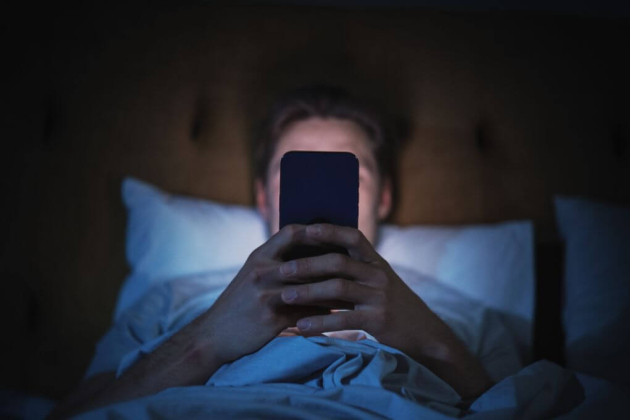
For many of us, our phones are the last thing we look at before going to sleep and the first thing we check when we wake up. Whether you're scrolling through social media, sending emails, or googling every random question that pops into your mind during the day, phone addiction is real and it can harm your sleep. Electronics and other digital devices often feature light-emitting diodes (known as LEDs) to illuminate their screens. These LED displays emit blue light, which can cause physiological damage, particularly by reducing the melatonin levels in your body, leading to a more alert state of mind.
As mentioned above, blue light technology after dark can cause your body to produce less melatonin. But why does that harm your sleep cycle? Melatonin is a hormone that your body produces during the night. It is specifically triggered by darkness and serves as a signal for your brain to prepare for sleep. When your body is exposed to light during the night, it can disrupt your melatonin production. This is also one reason why those who work night shifts may struggle with sleep during the day and develop a sleep disorder related to shift work. Particularly because sunlight is the strongest natural form of blue light.
Since exposure to any light can disrupt your sleep cycle, blue light has the strongest impact on your sleep. Blue light not only reduces your melatonin production, but this type of light also makes you feel more awake, which can make it harder to fall asleep or stay asleep.
Most digital devices we use every day emit some form of blue light. Blue light is emitted by mobile phones, tablets, laptops, computers, LED televisions, fluorescent lamps, and light bulbs. This is why late-night work, scrolling through social media, or watching your favorite show right before bed can make it harder for your body to fall asleep.
Although blue light technology can have negative sleep effects for anyone using digital devices at night, it especially affects children. Children go to bed earlier than adults, which reduces the time they are exposed to artificial light and screens before sleep. Despite this reduced exposure to blue light in the evening, studies have shown that children are affected by this light more significantly than adults. Exposure to blue light before bed lowers melatonin production more in children than in adults. Furthermore, children exposed to blue light are more likely to feel sleepy during the day due to lack of sleep the previous night. Spending more time on screens at night is also associated with later bedtimes, worse sleep quality, and fewer hours of rest for children. Since sleep is crucial for a child's development and children need more hours of sleep than adults, this issue is particularly concerning.
What can you do to prevent excess energy at night and the subsequent sleep disruption from blue light-emitting devices? Since almost all of our smart devices with screens use blue light, removing these devices from your home isn’t feasible for most people. However, if you can remove them from your bedroom, you can take steps to improve your sleep. Here are some tips that might help.
If you have your phone in your bedroom, it’s nearly impossible to avoid the screen before bed. It’s so easy to just quickly check your email, send a text message to a friend, set a reminder for the morning, or browse the web or social media when you’re having trouble falling asleep. The best way to avoid the temptation of your phone is to charge it outside the room. It might be helpful to have your phone just outside your bedroom door or on a table in the hallway so you can hear it ring in an emergency. And if your phone is your alarm clock, consider buying a traditional alarm clock.
Going to bed should be a calm and blissful experience. Typing on your laptop under the covers might feel cozy, but it can harm your sleep—even if you’re only using the laptop during the day. By associating your bed with work, you may find it more difficult to disconnect and relax, even hours later. And if you’re guilty of working at night, bringing that blue light into your sleep environment only exacerbates your sleep issues. The same goes for children. It might be helpful to create a separate study space for them to complete homework outside of the bedroom.
Many of us enjoy watching TV to fall asleep, but if you find you don’t feel well-rested or keep going to bed later and later, your problem may be your television. Since LED screens emit blue light, watching TV right before bed can be detrimental to your rest. It’s a good idea to unwind and disconnect from screens at least an hour before bed. Placing your TV outside your bedroom can be a great way to minimize blue light intrusion during the night.
The same applies to children. Create a dedicated space for them to watch TV and play video games, ideally in another room, so their bedroom is perceived as a place for rest and sleep.
While blue light is the most harmful to our sleep cycles, red light disrupts our circadian rhythm the least. Instead of using sources that emit blue light, choose a red bulb as your night light. And if you have children, a night light is likely a necessity. Switching light bulbs to those with a red hue is an easy solution.
While a tech-free bedroom is ideal for improving your sleep, it’s not possible for everyone. Some of us work various shifts, need to study late at night, or must keep phones beside the bed. Sometimes, technology is unavoidable. If you can’t completely remove blue light-emitting devices from your bedroom or evening routine, here are some tips to minimize their impact on your sleep.
Although blue light is emitted from screens regardless of brightness, you can reduce exposure by dimming your screens. Switch your devices to night modes, lower brightness settings, or, if possible, choose a black background with white text. This way, even if you need to study or work late, you won’t be exposed to as much blue light during the night. Also, be sure to set your children’s devices to night mode or show them how to dim brightness to reduce harsh blue light.
Screens are a part of our everyday lives today—at work, at school, and at home. If you can’t limit screen time at night, you might try to minimize the impact of blue light on your sleep by investing in blue light-blocking glasses. For best results, it’s recommended to use them only at night and not during the day. These glasses can help reduce the amount of blue light that your body receives at night.
One small way to reduce blue light at night is to dim the lights. Lowering the amount of LED or fluorescent lighting in your home at night can significantly impact the quality of your sleep. It can also help mentally prepare you for bedtime as it approaches.
Having a regular routine before bed can help signal to your body that it’s time to sleep. If possible, disconnect from screens and phones at least an hour before bedtime to give yourself a break from blue light. Incorporating a relaxing ritual into your pre-sleep routine can also help prepare your body for rest. This could include journaling or reading. Try to stick to your routine each night at the same time, even on weekends, to help your body sync with the pre-sleep schedule. For children, a bedtime routine can be especially helpful, so they clearly know when they are expected to go to sleep. It might be hard to pry a tablet away from a child on a whim, but if they know they can’t have access to screens when it’s bedtime, it might be much easier to keep them on track.
 Sale
Sale

 Mattress
 Solid Wood Beds
 Bed Bases
 Upholstered Furniture
 Action Sets
 Pillows and Home Textiles
 Health Positioning Aids
 Other PURTEX products
 Action Products at Discounted Prices
 Mattress covers
 Dog beds
 Discounted Goods