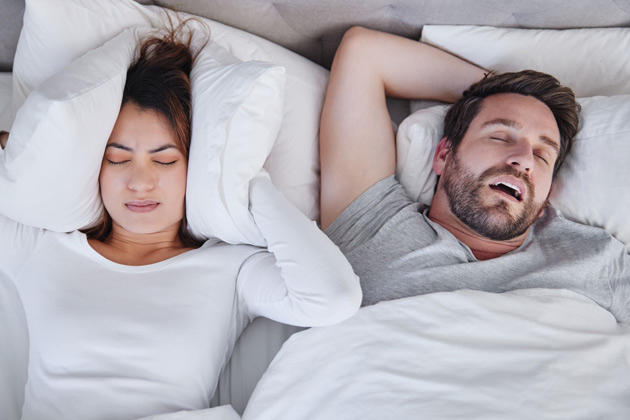
What helps with snoring? The most effective solutions are sleeping on your side, losing weight, avoiding alcohol before bedtime, and properly supporting your head. This unpleasant sound, caused by the vibration of relaxed tissues, disrupts your sleep and your partner's and may signal a more serious health problem. If you're looking for reliable ways to reduce snoring, read our practical guide.
Author:
Purtex
Added: 1. května 2026
What causes snoring and who is most affected?
Narrowing of the airways during sleep is the main answer to the question, what causes snoring. When you fall asleep, the muscles in the throat naturally relax. If this space is additionally narrowed by excess fat, inflammation of the mucous membranes, or an unsuitable position, the air must flow into the lungs more quickly. This pressure subsequently vibrates the soft palate and surrounding tissues, creating the characteristic sound.
Although snoring in men is statistically much more common (primarily due to the different distribution of fat in the neck and chest area), snoring in women is definitely not an exception. In women, this problem arises and worsens particularly during pregnancy or after menopause, when hormonal changes and loss of muscle tone occur.
10 proven tips on how to deal with snoring
Sleep on your side instead of your back: Sleeping on your back presents the greatest risk for snorers, as gravity causes the tongue to fall back and block the airways. A stable side position can be maintained with a quality mattress that relieves pressure on the shoulders and hips, so you won't accidentally roll back onto your back during the night.
Maintain a healthy weight: Losing weight is often the most effective weapon. Excess fat in the neck area physically pushes against the airway and narrows it. A healthy diet and regular exercise significantly reduce this pressure.
Elevate your head by a few centimeters: A slightly elevated head position prevents the soft tissues from falling back. Anatomical models from our pillows and home textiles section will keep your airways beautifully clear.
Avoid alcohol and sedatives: Alcohol relaxes the throat muscles much more than natural sleep. An evening glass of wine or sleeping pills significantly worsen tissue vibrations.
Quit smoking: Cigarette smoke directly irritates the mucous membranes, causing their swelling and inflammation. Narrowed and congested airways logically lead to loud breathing and nocturnal noise.
Stay adequately hydrated: Lack of fluids causes secretions in the nose and throat to thicken and stick. Drinking enough plain water during the day keeps the mucous membranes moist and clean.
Treat a stuffy nose early: A runny nose or allergies force you to breathe through your mouth, which is one of the main triggers. Clear your airways before bed with saline solution or a suitable decongestant (spray).
Use nasal strips: Special strips or nasal dilators gently and mechanically widen the nostrils, immediately improving airflow in milder forms of the condition.
Practice sleep hygiene: Extreme exhaustion leads to abnormally deep sleep, in which the neck muscles are completely "helpless." Go to bed regularly and ensure your bedroom is quiet, dark, and cool.
Consider professional medical help: Gasping for breath, pauses in breathing, or extreme daytime fatigue are not common signs of ordinary snoring. They may signal a dangerous health condition, which you can learn more about in our glossary under the term sleep apnea.
Occasional snoring (such as when you have a cold or after a drink) is not dangerous. However, if you snore loudly every night and experience pauses in breathing or morning headaches, it may be sleep apnea. This places extreme stress on the cardiovascular system and requires examination in a sleep lab.
Why does alcohol worsen nighttime snoring?
Alcohol acts as a strong muscle relaxant. It causes the muscles that usually keep the airways open to loosen much more. Air then must pass through a very narrow gap, creating strong and loud vibrations of the soft palate.
What is the difference between snoring in men and women?
Men have anatomically differently structured airways (they are longer and narrower) and they tend to accumulate fat in the upper body and neck more frequently. Women do not suffer from snoring as much at a younger age; however, the risk increases rapidly after menopause, when estrogen levels fall, which maintains muscle tone.
Can changing my pillow help?
Yes, a suitably chosen anatomical pillow helps keep the cervical spine aligned and prevents unnatural bending of the neck towards the chest, which blocks the airway. Combined with a side-sleeping position, this is a very effective first aid.
 Log in


 Cart
Cart



 Sale
Sale

 Mattress
 Solid Wood Beds
 Bed Bases
 Upholstered Furniture
 Action Sets
 Pillows and Home Textiles
 Health Positioning Aids
 Other PURTEX products
 Action Products at Discounted Prices
 Mattress covers
 Dog beds
 Discounted Goods