 Log in


 Cart
Cart
Loading...
Váš nákupný košík je momentálne prázdny.
Přidejte produkty do košíku.
Sleeping on your side is one of the most popular and healthiest sleeping positions – about ¾ of people sleep this way. It offers numerous health benefits and enhances recovery. Below, you'll learn how to do it correctly and create optimal conditions for rest.
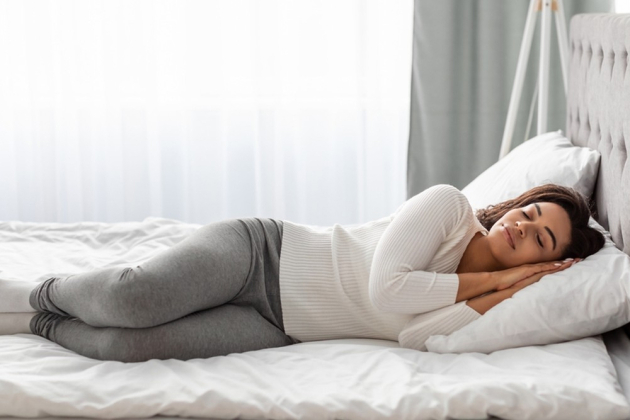
Side sleeping is not only a matter of comfort, but it also has its justification from a medical perspective. This position allows the body to naturally maintain healthy spinal curvature while supporting the proper functioning of various organ systems. Unlike sleeping on your back or stomach, side position offers an optimal balance between comfort and health benefits. When choosing the right sleeping position, it is important to consider not only personal preferences but also health conditions and individual bodily needs. Sleeping on your side has proven to be a universally suitable choice for most people. More information about sleeping positions can be found in our article What position is best for sleeping?
One of the most significant advantages of sleeping on your side is its positive effect on the respiratory system. In this position, the tongue and soft palate are not pressed against the back wall of the throat, which significantly reduces the risk of snoring. For many couples, this is a key factor for both partners' restful sleep. Sleeping on your side can be especially beneficial for people suffering from sleep apnea. This sleep disorder is characterized by repeated pauses in breathing during the night, which can have serious health consequences. The side position helps keep the airways open and reduces symptoms of sleep apnea. You can read more about this disorder in the article How to get rid of sleep apnea. If you struggle with snoring, you will find useful advice in our article 10 tips on how to deal with snoring.
Sleeping on your left side has a positive effect on digestion. This position supports the natural flow of stomach juices and facilitates gastric emptying. At the same time, it helps prevent gastroesophageal reflux, which can cause heartburn and disrupt sleep quality.
The lymphatic system plays a key role in removing toxins from the body. Sleeping on your left side supports lymphatic drainage, especially in the brain area, which can contribute to better regeneration and protection against neurodegenerative diseases.
For pregnant women, sleeping on their side, especially on the left, is often recommended by doctors. This position improves blood flow to the placenta and reduces pressure on the inferior vena cava, ensuring better oxygen and nutrient supply to the baby.
Anatomical pillows are specifically designed to respect the natural curvature of the cervical spine. Their ergonomic shape ensures optimal support for the head and neck in a side position. These pillows often contain memory foam or other advanced materials that adapt to individual body shapes. An ideal pillow for side sleeping should have a medium to higher height (usually 12-15 cm), firmer support, and a material that retains its shape throughout the night. Breathability of the material is also important, ensuring optimal temperature during sleep. In our offer, you will find a wide range of models made from memory or PUR foam.
The mattress plays just as important a role as the pillow. For side sleeping, a mattress with medium to medium-firm hardness is suitable, providing adequate support for the spine while allowing the hips and shoulders to sink slightly into the surface.
Zone mattresses are designed to provide different levels of support in different parts of the body. For people sleeping on their side, mattresses with softer zones in the shoulder and hip areas and firmer support in the waist area are ideal. From our offer, 7-zone mattresses, such as GILIEN SET 1+1 and TRIFLEX PLUS are particularly suitable.
Memory foam, latex mattresses, or hybrid mattresses with layers of different materials are an excellent choice for side sleeping. These materials adapt to the contours of the body and ensure even pressure distribution.
If you are used to sleeping in a different position, transitioning to side sleeping may require some time and patience. Start gradually, use supportive pillows and give your body time to adapt. For the first few nights, try sleeping on your side for only part of the night. Gradually increase the time spent in this position until your body adjusts. Sleeping on your side is the optimal choice for most people, as it combines health benefits with high comfort. Properly executed side sleeping can significantly enhance the quality of your rest, reduce snoring, support digestion, and contribute to overall health.
The key to success is investing in quality sleep aids - the right mattress and pillows that support the natural alignment of the body. Remember, every individual is unique, and what works for one person may not be ideal for another. Experiment with different combinations of aids and techniques until you find your personal path to calm and healthy side sleeping. An investment in quality sleep will pay off many times over in the form of better health, increased energy, and overall quality of life. Sleeping on your side could be the right step towards the better rest you deserve.
 Sale
Sale

 Mattress
 Solid Wood Beds
 Bed Bases
 Upholstered Furniture
 Action Sets
 Pillows and Home Textiles
 Health Positioning Aids
 Other PURTEX products
 Action Products at Discounted Prices
 Mattress covers
 Dog beds
 Discounted Goods